Class 33s and Mainline Work at Yeovil Junction
Published: 15/07/2026
Credit: AS
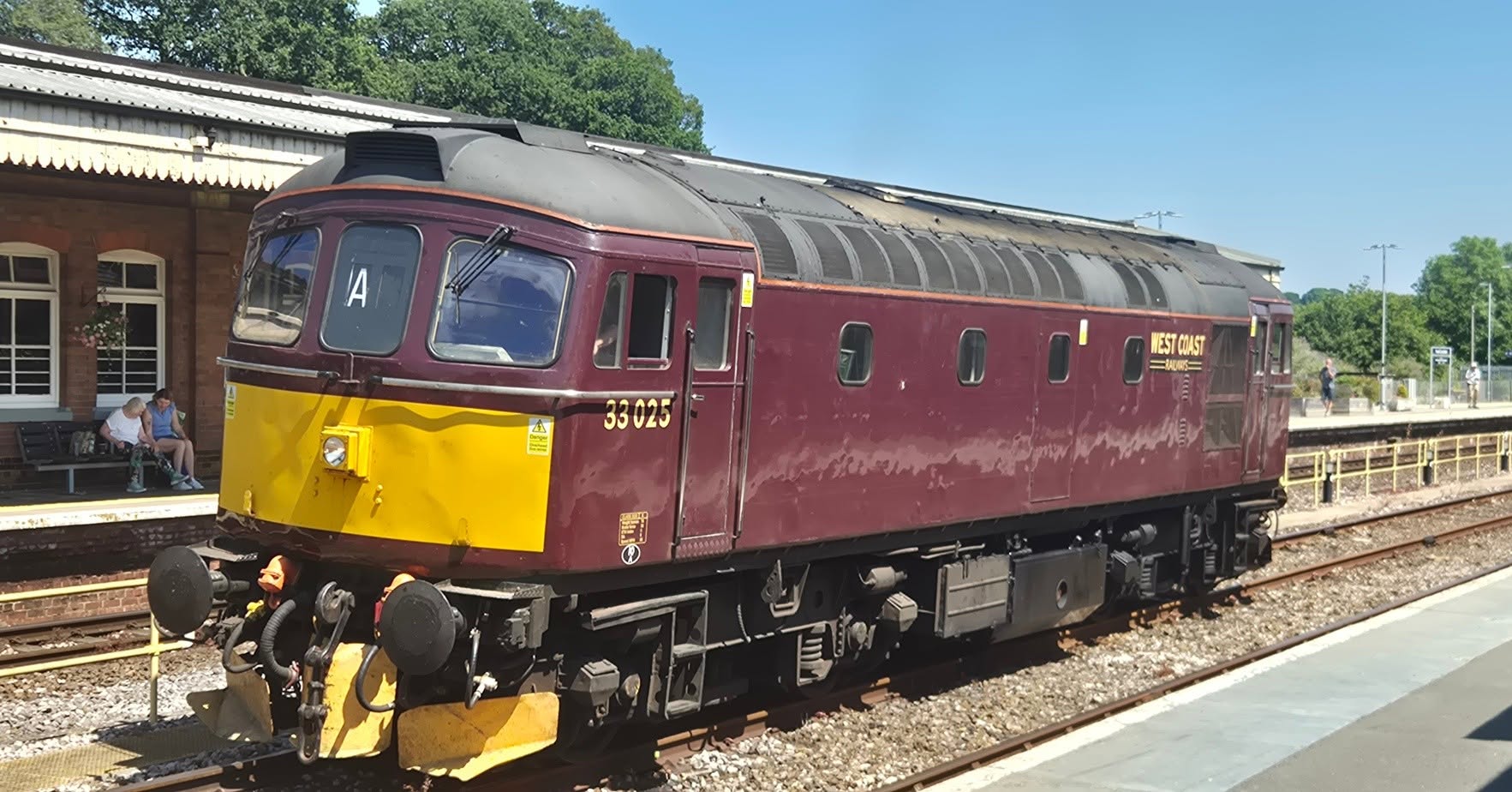
Yeovil Junction has long been a stopping point for mainline steam, but it's not unusual to see a Class 33 "Crompton" put in an appearance too - and they're doing rather more than just making up the numbers.
Built by the Birmingham Railway Carriage and Wagon Company for the Southern Region, the Class 33 - or "Crompton", named after the Crompton Parkinson electrical equipment fitted inside - first entered British Rail service in 1960, with the class completed by 1962. From the outset they were based at Hither Green and Eastleigh, giving them a natural home right across the old Southern Region network, from the Kent coast in the east to Weymouth and the West Country in the west.
Locally, the Class 33 became a familiar sight on the Waterloo to Exeter line - the same route that passes through Yeovil Junction - after taking over passenger duties from the Warship diesel-hydraulics in 1971. For much of the 1970s, a 33 hauling a rake of coaches through Yeovil Junction on its way to or from Exeter would have been an everyday sight, calling at all the local stations along the way. That changed as more powerful Class 50s were gradually introduced on the route from around 1980 onwards, taking over the bulk of West of England main line passenger work and easing the 33s off their long-standing patch.
Further south, the class made its name on the Bournemouth to Weymouth "push-pull" service, working in tandem with 4TC coaching sets from July 1967 right through to May 1988, when electrification of the line finally reached Weymouth and did away with the need for a diesel on the back. Even after that, Class 33s continued to be found around Weymouth on Channel Islands boat train duties down to the harbour, and on general freight and engineering work across the old Southern Region well into the 1990s.
By the time British Rail was broken up, most Class 33s had been withdrawn from regular service, though a good number survived into preservation and, unusually for a class of that age, several remain certified to run on the main line today. That background makes them a natural fit for the kind of work they still do at events like ours: covering the "diesel leg" of a steam-hauled tour, so the steam locomotive can come off the train, be turned and serviced at a location like ours, and then rejoin later without holding up the whole schedule. One example of this in action was 33025, which worked the diesel leg during Clan Line's visit on 9th July, taking the train onward towards Weymouth while Clan Line had her turn on the turntable in front of the crowds.
There aren't many Cromptons left in main line condition these days, so any appearance is worth watching out for. If you're planning a visit and want to know what's booked to work a particular tour, it's always worth checking with the operator or our events page beforehand, since diesel diagrams like this can change at short notice.